
Is Beef Tallow Good for Eczema? What the Evidence Shows
A 2024 scoping review screened 147 studies on tallow for skin. Here is what it found, what it didn't find, and what that means if you're managing eczema.
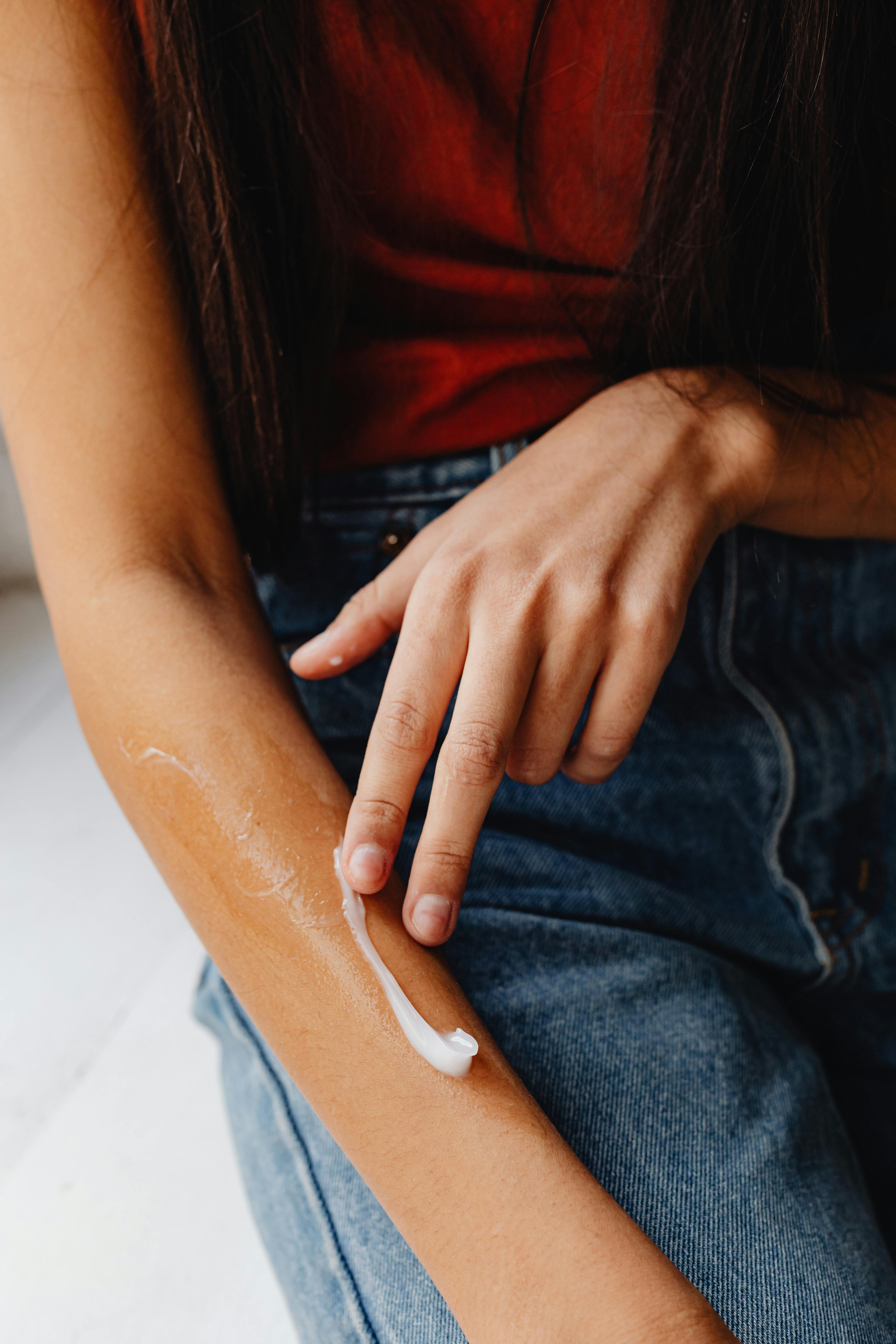
Eczema management involves a lot of trial and error. If you've cycled through prescription creams, ceramide moisturizers, and every "gentle" formula on the shelf, you've probably started looking at simpler alternatives. Beef tallow keeps coming up.
It shows up in Reddit threads, dermatologist comment sections, and natural skincare communities with remarkable consistency. But anecdote isn't evidence, and a lot of what's written about tallow online is coming from people selling it. This post looks at the actual clinical literature, not testimonials and not brand marketing, to give an honest account of what tallow can and can't do for eczema-prone skin.
TL;DR: A 2024 peer-reviewed scoping review (PMC11193910, published in Cureus) screened 147 studies and found tallow increased skin hydration by 47.2% at 180 minutes after application. Only 19 of those 147 studies met inclusion criteria, so the evidence base is promising but not yet definitive. Tallow functions as an occlusive moisturizer that may support barrier repair. It is not a treatment for eczema.
What Does the Research Actually Say About Tallow for Skin?
A 2024 scoping review published in Cureus (PMC11193910) screened 147 published articles on tallow's effects on skin. Only 19 met the inclusion criteria. That ratio isn't a red flag about tallow specifically — it reflects how little formal dermatology research has been done on traditional animal fats as cosmetic ingredients. Among those 19 studies, the most consistent finding was occlusive barrier support and measurable hydration improvement.
The hydration data is the most concrete signal in the review. Tallow increased skin hydration by 4.7% at 30 minutes after application, 23.2% at 60 minutes, 38.4% at 90 minutes, 44.4% at 120 minutes, and 47.2% at 180 minutes. That's a progressive improvement over three hours, not a single-timepoint snapshot.
Why did only 19 of 147 screened studies make it through? The authors applied standard scoping review methodology: studies had to measure skin outcomes directly, use appropriate controls, and report data in a usable form. A lot of the broader literature on animal fats and skin simply doesn't meet those criteria. That's not unique to tallow. Most of the money in skincare research goes toward patentable synthetic compounds, where there's a financial return on the research investment. Tallow has no patent potential.
A 2024 scoping review in Cureus (PMC11193910) screened 147 published studies on tallow applied to skin. Only 19 met inclusion criteria. Among those, the most consistent finding was measurable barrier support: skin hydration increased progressively from 4.7% at 30 minutes to 47.2% at 180 minutes after tallow application.
What Makes Tallow Relevant to Eczema Specifically?
Eczema (atopic dermatitis) is fundamentally a barrier dysfunction disease. When the skin barrier is impaired, moisture escapes and irritants penetrate more easily. The standard clinical approach to managing eczema involves restoring and maintaining that barrier, which is exactly what occlusive moisturizers do.
Tallow is an occlusive. It doesn't add moisture to the skin directly. It creates a layer over the skin surface that slows transepidermal water loss (TEWL). This is the same core mechanism as petrolatum, the gold standard occlusive used in eczema management, and it's part of how ceramide-based products work as well. The mechanism itself is clinically valid.
So how does tallow stack up against ingredients that were specifically designed for the job? Ceramide-based moisturizers like CeraVe are the clinical standard for eczema barrier repair. Ceramides are lipids that occur naturally in the skin barrier itself, and topical ceramides can be incorporated directly into the barrier structure. Tallow's fatty acid profile is predominantly oleic and palmitic acid, both of which are similar to human skin surface lipids. Similar isn't the same as identical, and compatibility isn't the same as clinical equivalence.
Eczema affects an estimated 10 to 15% of Canadians, according to the Toronto Dermatology Centre citing the Eczema Society of Canada. The Eczema Society of Canada's 2025 Burden of Eczema report documents the cycle many patients go through: prescription treatments, moisturizer trials, rotation back to basics. That cycle is why simpler alternatives keep coming up in eczema communities.
How Does Tallow Compare to Standard Eczema Moisturizers?
No head-to-head clinical trial compares beef tallow directly to ceramide moisturizers or petrolatum for eczema management. That study simply hasn't been done. Any comparison made here is based on mechanism and ingredient analysis, not trial data.
| Moisturizer Type | Mechanism | Eczema Evidence | Skin Compatibility | Ingredients |
|---|---|---|---|---|
| Petrolatum (Vaseline) | Occlusive | Strong — gold standard | High — inert | 1 (mineral) |
| Ceramide moisturizer (e.g. CeraVe) | Occlusive + barrier repair | Strong — multiple RCTs | High — mimics barrier lipids | 10–20+ |
| Beef tallow (cosmetic-grade) | Occlusive | Preliminary — no RCTs | High — similar lipid profile | 1–3 |
| Shea butter | Occlusive + emollient | Limited — few trials | High | 1 |
Tallow's mechanism is valid. Its evidence base is thin because it hasn't been studied adequately, not because it's been studied and found ineffective. That distinction matters when you're evaluating the table above.
The column that matters most for eczema-prone skin often isn't "mechanism" or "evidence." It's "ingredients." Eczema-prone skin is reactive skin. Preservatives, fragrances, and emulsifiers are common eczema triggers, and most multi-ingredient moisturizers include at least a few of them. A tallow balm with one or two ingredients removes most of that trigger exposure. That's not a trivial advantage for someone who has reacted to three "gentle" formulas in a row.
What Do People with Eczema Actually Report?
The formal clinical literature on tallow and eczema is thin. The anecdotal record is extensive. That distinction matters. Anecdote isn't evidence. But patterns in community discussions can point you toward a hypothesis worth testing on your own skin.
A 2024 cross-sectional analysis (PMC12661468) examined 200 social media posts about tallow and found that 92% of Instagram content and 76% of non-medical creator content showed financial bias: the people posting were selling tallow products. That context is critical when reading testimonials. A lot of the positive signal online is coming from sellers, not neutral users.
What do genuinely neutral community spaces suggest? Reddit threads, dermatologist Q&A comment sections, and eczema support forums show something roughly like a 50/30/20 pattern. About half of people with dry or eczema-prone skin report meaningful improvement. About 30% see no change. About 20% experience breakouts or irritation. Those numbers aren't from a study. They're a rough aggregation of community discussions, and they should be read as such.
The customers who report tallow helped their eczema most consistently share two things: very dry, non-oily baseline skin, and a simplified overall routine. They weren't just adding tallow. They were removing other products at the same time. That's correlation, not causation, but the pattern comes up often enough to be worth noting.
Is tallow right for every eczema presentation? Almost certainly not. Eczema has multiple subtypes, varying triggers, and significant individual variation. What helps one person's barrier can aggravate someone else's.
How Should You Use Tallow If You Have Eczema?
If you want to try tallow for eczema-prone skin, the following protocol reduces your risk of a bad reaction. Don't skip the patch test step. Eczema-prone skin is reactive by definition.
- Start with a patch test. Apply a small amount to the inner forearm and monitor for 48 to 72 hours. Don't apply broadly without testing first.
- Use cosmetic-grade, not food-grade. Cosmetic-grade tallow is micro-filtered to remove particulates. Food-grade retains solids that can irritate sensitive skin. See cosmetic-grade filtration.
- Apply to damp skin. Occlusives work best applied immediately after washing while skin is still slightly damp. You're sealing in existing moisture, not adding new moisture, so timing matters.
- Use a thin layer. Tallow is dense. You need far less than you'd use with a lotion. Start with a small amount and spread it.
- Give it two weeks. Skin barrier repair takes time. A single application won't tell you much. Two weeks of consistent use on a test area will give you real signal.
- Don't stop other treatments without consulting your doctor. Tallow is a moisturizer, not a treatment. If you're using prescribed topical steroids or other medications, continue them. Talk to your dermatologist before making changes.
Tallow has a four-thousand-year history on human skin. People were using it for dry and damaged skin long before modern eczema classifications existed. That history doesn't make it clinically validated, but it does mean it's not a new experiment.
Frequently Asked Questions
Will beef tallow cure my eczema?
No. Tallow is an occlusive moisturizer that supports the skin barrier. It may reduce dryness and improve hydration (PMC11193910 found a 47.2% hydration increase at 180 minutes after application), but eczema is a complex inflammatory condition with genetic and immune components. Tallow is a management tool for barrier support, not a treatment for the underlying condition.
Is tallow better than CeraVe for eczema?
No head-to-head clinical trial exists comparing the two. CeraVe has strong RCT evidence behind it, and its ceramides integrate directly into the skin barrier structure. Tallow's mechanism is similar (occlusive) but its evidence base is thinner. For moderate to severe eczema, consult a dermatologist before switching from an established treatment to anything new.
How long before I see results with tallow on eczema skin?
The 2024 PMC scoping review showed measurable hydration improvement within 30 to 180 minutes of a single application. For sustained skin barrier improvement, consistent use over two to four weeks is a more realistic evaluation period. Patch test first on a small area, then expand gradually if there's no reaction.
Is tallow safe for children with eczema?
The PMC scoping review (PMC11193910) found no serious adverse effects reported in the studies it reviewed. However, no pediatric-specific clinical trials on tallow for eczema exist. Children's skin, particularly with eczema, is more reactive. Consult your child's dermatologist before using any new product on eczema-affected skin.
What the Evidence Actually Means for You
The 2024 scoping review (PMC11193910) is the strongest clinical signal we currently have on tallow for skin. It's promising. It's not definitive. Nineteen qualifying studies out of 147 screened tells you both that the early results are meaningful and that the research base needs more work.
Tallow's mechanism, occlusion and barrier support, is directly relevant to eczema management. That's not a small thing. The mechanism is sound. What's missing is the large-scale RCT evidence that would let clinicians make confident recommendations.
The ingredient simplicity argument is real. Eczema-prone skin reacts to triggers, and multi-ingredient products carry more trigger exposure. A short ingredient list isn't a magic fix, but it reduces variables.
Tallow has not been tested head-to-head against ceramide products. That gap in the literature is honest to acknowledge. It doesn't mean tallow is inferior. It means we don't know yet from clinical trial data.
We make cosmetic-grade tallow balms in BC with one to three ingredients. If you want to test it, our shop is the starting point. Patch test first. Eczema-prone skin deserves that caution.