Beef Tallow on Skin: A History That Predates Every Brand Selling It
Tallow has been used on human skin for at least 4,000 years. Here is the actual historical record, from ancient Mesopotamia and the Victorian pharmacopoeia to the modern resurgence.

Every few years, the skincare industry rediscovers something old and sells it back to you as new. Tallow is the latest example. Scroll through any natural skincare marketplace and you will find dozens of brands selling beef tallow balm at wildly different price points, most of them launched in the last five years, all of them acting like they invented something.
They didn't. Humans have been putting rendered animal fat on their skin for at least four thousand years. The historical record is not ambiguous about this. What follows is that record. Not marketing copy, not a sales pitch. Just what actually happened and when.
TL;DR: Tallow was used on human skin from at least 2000 BCE through the 19th century, when it was an officially listed ingredient in the US and British pharmacopoeias. It was displaced by petroleum derivatives in the 20th century, not because it stopped working, but because mineral oil was cheaper to produce at scale. The modern resurgence is a return to a documented material, not the discovery of a new one.
When Did Humans First Use Tallow on Skin?
The earliest documented use of animal fats for skin protection dates to ancient Mesopotamia, roughly 2000 BCE. Sumerian clay tablets reference rendered fat mixed with plant ash (incidentally, also the earliest record of soap). The fat in question came from whatever livestock was available: sheep, goat, cattle.
In Egypt, rendered animal fats appear in medical papyri as treatments for burns, dry skin, and scarring. The Ebers Papyrus (circa 1550 BCE) lists animal fat as a base ingredient in over a dozen topical preparations. The Egyptians were not sentimental about this. Fat was a functional material. It protected skin from sun and sand, it held other ingredients against the body, and it was cheap to produce from slaughter byproducts.
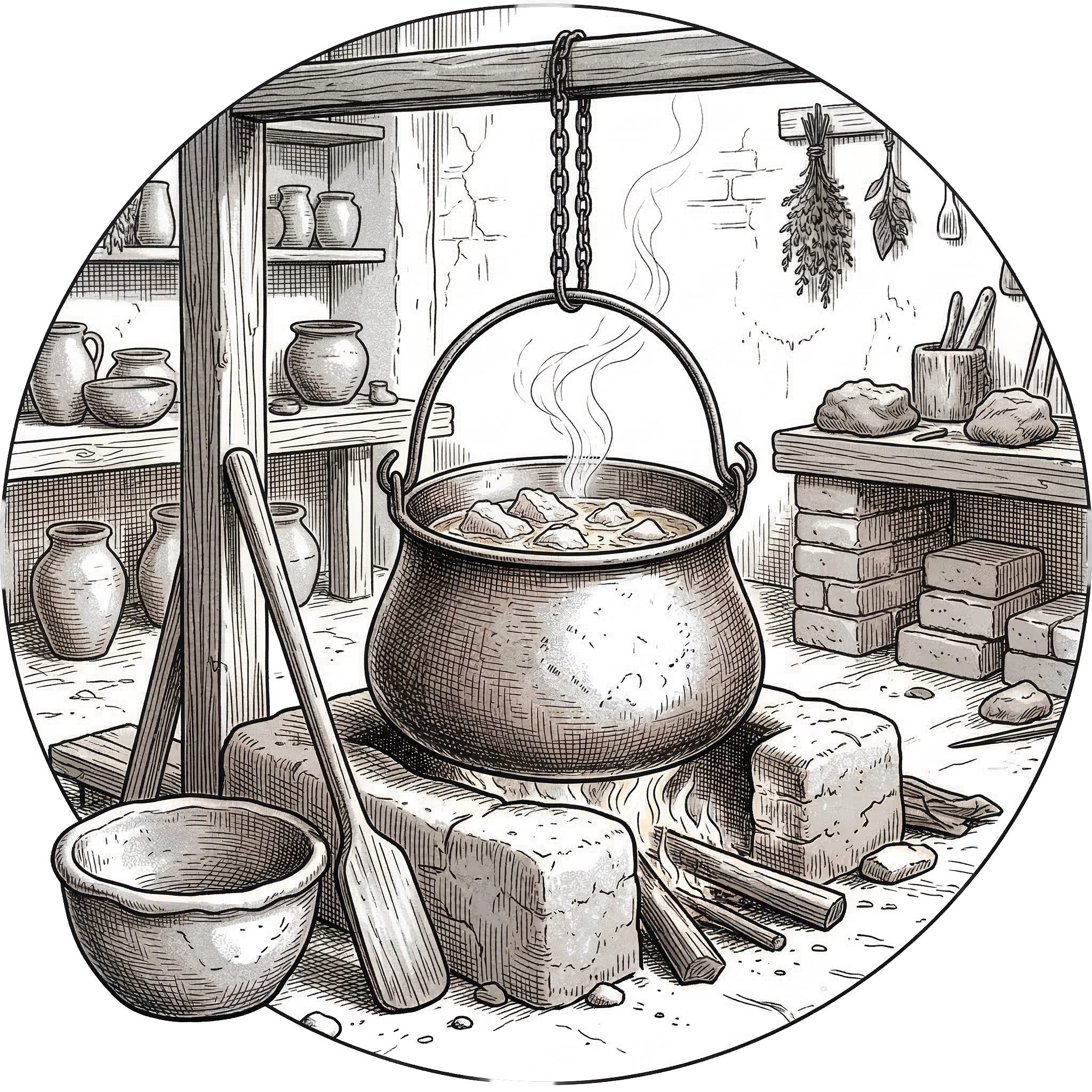
Rome took it further. Galen of Pergamon, the Greek physician practising in Rome around 150 CE, is credited with developing one of the earliest cold creams: a mixture of olive oil, beeswax, water, and animal fat. His formula became the foundation of European skincare for the next fifteen hundred years. That is not an exaggeration. Cold cream recipes in 18th-century European pharmacopoeias are recognizably descended from Galen's original.
How Was Tallow Used in Medieval Europe?
Through the Middle Ages, tallow was not a niche product. It was an industrial commodity. Tallow chandlers, the tradespeople who rendered and sold animal fat, were a recognized guild in London by the 14th century. Their primary trade was candle-making, but rendered tallow moved through the same supply chain into soap, leather dressing, and skin salves.
The distinction between "skincare" and "medicine" did not exist in the way we understand it now. A farmer's wife rendering tallow from the autumn slaughter would use the same fat to make candles, waterproof boots, and treat cracked hands. There was no branding. There was no markup. It was rendered fat, and it worked.
For chapped hands and rough skin, take fresh mutton suet, render it clean, and apply warm to the affected parts before bed.
— Mrs. Beeton's Book of Household Management, 1861
By the time the British Empire was industrializing, tallow was among the most traded commodities in the world. Australia's early export economy ran partly on tallow shipped to Britain for soap and candle production. The fat that didn't go into candles or soap went into pharmaceutical preparations and household skin remedies.
What Did Victorian Pharmacists Know About Tallow?
The 19th century is where the written record gets specific. The United States Pharmacopeia (USP) and British Pharmacopoeia both listed "Sevum Praeparatum" (prepared tallow) as an official ingredient. It appeared in formulas for ointments, lip salves, and protective skin creams. Pharmacists compounded it on site.
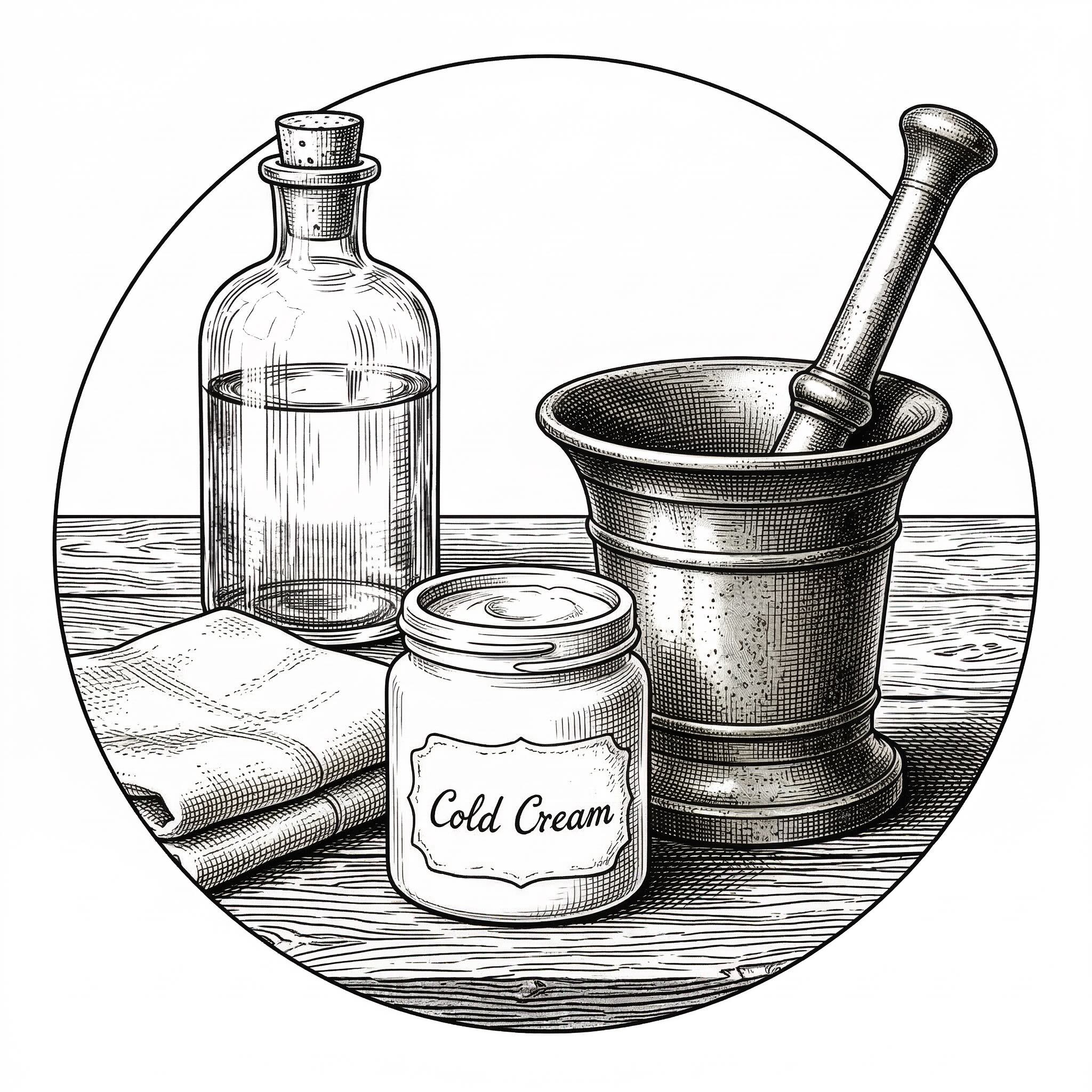
The formulations were simple. Tallow provided the occlusive base: it sits on the skin surface and prevents moisture loss. Beeswax added structure. Essential oils or camphor provided fragrance or therapeutic effect. These three- and four-ingredient preparations were the standard of care for dry and damaged skin throughout the English-speaking world for most of the 1800s.
Keep that in mind next time you see a four-ounce jar of tallow balm with three ingredients priced at $40+. The Victorians had the same product. They sold it for pennies at the chemist.
Why Did Tallow Disappear from Skincare in the 20th Century?
Two things happened. First, petroleum chemistry. In 1859, the modern petroleum industry began with the Drake Well in Pennsylvania. Within decades, petroleum byproducts like mineral oil, petrolatum (Vaseline, patented 1872), and paraffin wax became available at industrial scale and at prices animal fats could not match. They were shelf-stable, odourless, and consistent batch to batch.
Second, marketing. The emerging cosmetics industry of the early 20th century needed to differentiate itself from old-fashioned home remedies. "Scientific" formulations with synthetic ingredients carried prestige that rendered fat did not. Nobody was going to build a luxury brand around tallow when they could use mineral oil and call it "advanced moisturizing technology."
By the 1960s, tallow had largely disappeared from commercial skincare. It persisted in soap (many commercial bar soaps still contain sodium tallowate) and in niche agricultural use, but the cosmetics counter had moved on.
The Modern Resurgence
The return started quietly in the 2010s, driven by the ancestral health movement and a broader consumer shift toward recognizable, minimal ingredients. The reasoning was simple: tallow has a fatty acid profile (predominantly oleic and palmitic acid) that closely mirrors human skin surface lipids. If it worked for thousands of years, petroleum-based moisturizers are not the only option.
By 2020, tallow skincare had become a legitimate product category. Small-batch producers emerged across North America, most sourcing grass-fed suet and rendering it themselves. Quality varies widely: some producers sell food-grade tallow with essential oils stirred in; others filter to cosmetic grade. The filtration standard matters more than anything else on the label.
Food Grade vs. Cosmetic Grade: Why It Matters Now
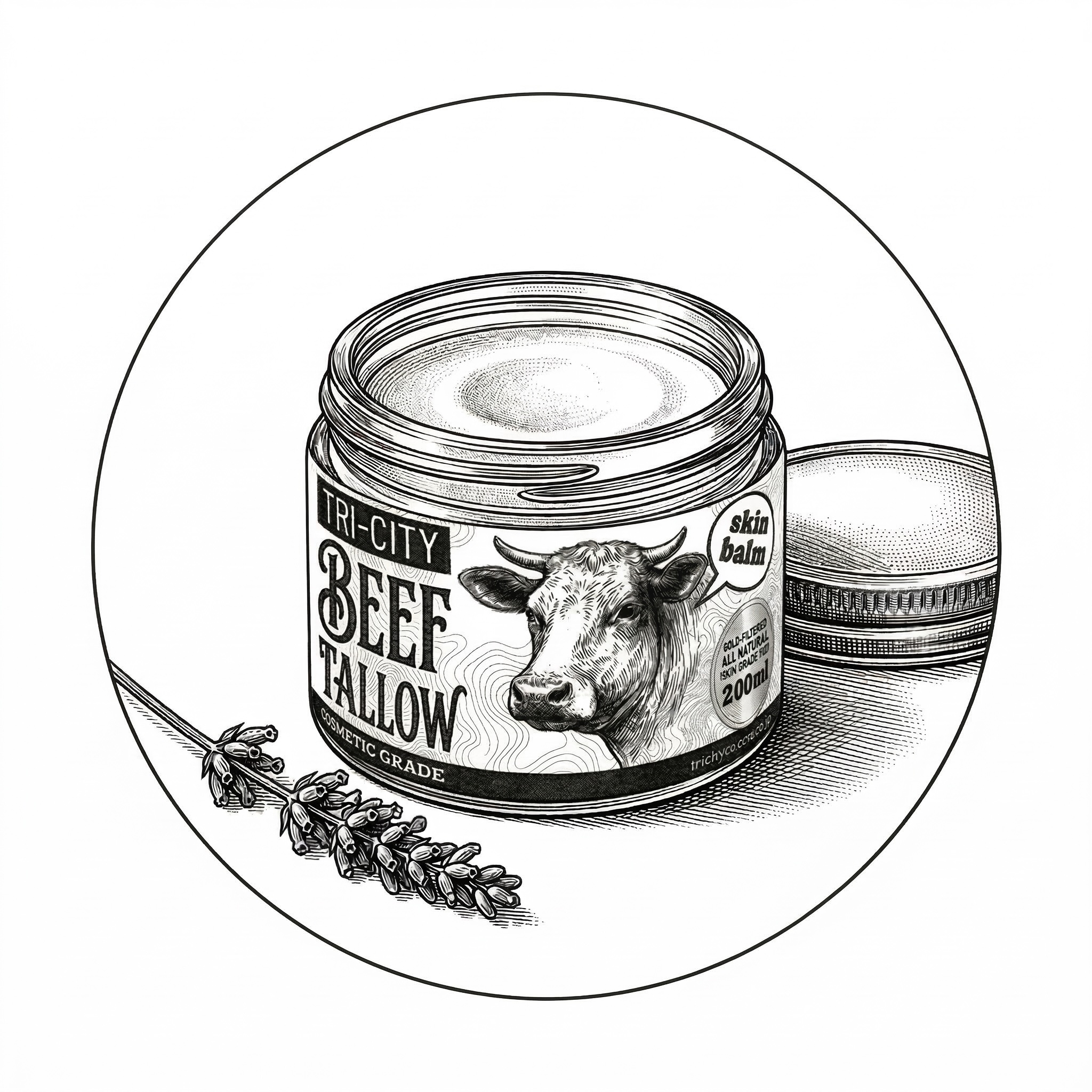
The historical record does not distinguish between grades of tallow for skin use, because modern filtration technology did not exist at that scale. Victorian pharmacists strained their tallow through muslin. Today the difference is filtration — and it determines whether tallow belongs on your skin or in a frying pan.
| Food Grade | Cosmetic Grade | |
|---|---|---|
| Intended use | Cooking, frying | Skin application |
| Filtration | Basic straining | Industrial micro-filtration |
| Odour | Mild to moderate beef smell | Odourless |
| Colour | Yellow to off-white | White, consistent |
| Particulates | May contain residual solids | Removed entirely |
| Shelf life (skin use) | Shorter, prone to rancidity | 12+ months, no preservatives |
| Texture | Variable, grainy | Smooth, consistent |
| Price (typical) | $8–15 per 200ml | $25–35 per 200ml |
The filtration level, not the source fat, is what determines quality for skin use. A jar that says "grass-fed" but skips cosmetic-grade filtration is selling you cooking fat at skincare prices. Learn more about what cosmetic grade actually means.
What Does the Historical Record Tell Us?
If you are reading this, you are probably evaluating tallow as a skincare option and trying to figure out whether the hype is justified. Here is what the history says:
- Tallow has been used on human skin for at least 4,000 years, across dozens of cultures and climates.
- It was a standard pharmaceutical ingredient in the West through the entire 19th century.
- It was replaced not because it stopped working, but because petroleum derivatives were cheaper to produce at scale and easier to market.
- The modern resurgence is a return to a known material, not the discovery of a new one.
None of this means tallow is a miracle product. It is rendered fat. It is an effective occlusive moisturizer with a fatty acid profile similar to human skin lipids. That is the claim, and the historical and biochemical record supports it. Anyone telling you more than that is selling you something.
Frequently Asked Questions
When did humans first use tallow on skin? The earliest documented evidence dates to approximately 2000 BCE in ancient Mesopotamia, where Sumerian clay tablets reference rendered fat in skin preparations. The Egyptian Ebers Papyrus (circa 1550 BCE) lists animal fat as a base in over a dozen topical treatments. The use of tallow for skin protection is at least four thousand years old and spans multiple independent civilizations.
Was tallow ever an official pharmaceutical ingredient? Yes. Both the United States Pharmacopeia (USP) and the British Pharmacopoeia listed "Sevum Praeparatum" (prepared tallow) as an official ingredient throughout the 19th century. Pharmacists compounded it on-site into ointments, lip salves, and protective skin creams. It was the standard of care for dry and damaged skin across the English-speaking world, not a folk remedy.
Why did tallow disappear from commercial skincare? Two reasons: economics and marketing. Following the 1859 Drake Well, petroleum byproducts became available at industrial scale below the cost of rendered animal fat: mineral oil, petrolatum (Vaseline, patented 1872), and paraffin wax. The early 20th-century cosmetics industry also actively promoted synthetic formulations as scientifically superior. Tallow was effectively gone from commercial skincare by the 1960s, not because it failed but because it was outcompeted on price and prestige.
What is the difference between food-grade and cosmetic-grade tallow? Food-grade tallow is rendered for culinary use and may retain colour, odour, and particulates unsuitable for skin application. Cosmetic-grade tallow is micro-filtered to remove these, producing an odourless, shelf-stable product with consistent texture. Victorian pharmacists used muslin straining; current cosmetic-grade processing uses industrial micro-filtration. The filtration level, not the source fat, is what determines quality for skin use.
Is beef tallow suitable for sensitive skin? Tallow has a fatty acid composition dominated by oleic and palmitic acid, which closely mirrors the profile of human skin surface lipids. This makes it compatible with most skin types. It is occlusive — it sits on the surface and prevents moisture loss — rather than water-based. It is not recommended for oily or acne-prone skin, where occlusives can contribute to congestion. For dry, normal, and sensitive skin, both the historical record and current user experience support it as an effective, additive-free moisturizer.
We make cosmetic-grade beef tallow skincare in Canada. Grass-fed suet, micro-filtered locally, packed in 200ml jars with ingredient lists you can count on one hand.